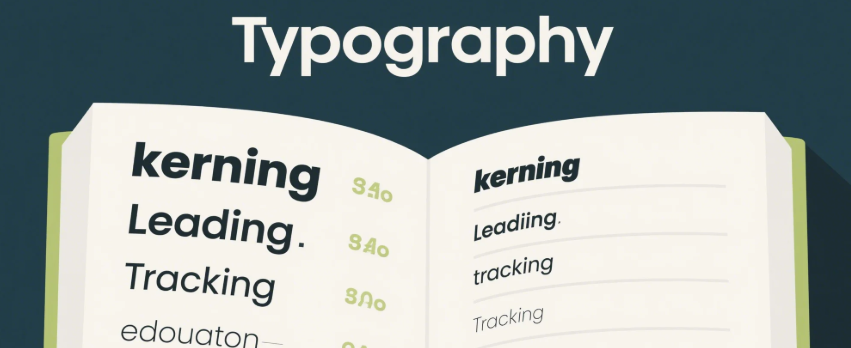
Typography is one of the most overlooked yet essential parts of design. Great typography helps your content feel polished, readable, and trustworthy — even if you’re not a designer.
Here are 6 typography basics every non-designer should understand:
-
Use Font Pairing — Not Font Chaos
Stick to 1–2 fonts in a design. Use one for headings, one for body text. Bonus: choose typefaces from the same family (e.g., Inter Bold + Inter Regular) for automatic harmony. -
Know Your Font Categories
Sans-serif = modern and clean (great for digital)
Serif = formal and traditional (better for editorial)
Script = expressive and decorative (use sparingly) -
Respect Hierarchy
Headlines should stand out from subheads and body text — not just in size, but also in weight (bold), color, or spacing. Think H1 → H2 → paragraph. -
Watch Your Line Spacing (Leading)
Too tight = hard to read. Too wide = disconnected. Ideal line-height is usually 1.4–1.6x the font size. -
Keep Line Length Comfortable
Don’t stretch your text edge to edge. Ideal paragraph width? 50–75 characters per line. It’s easier on the eyes and improves reading flow. -
Alignment Matters
Avoid center-aligning long blocks of text. Left-aligned paragraphs are easier to read and scan — especially on mobile.
Bonus Tip: Don’t Use Display Fonts for Body Text
Fonts designed for headlines shouldn’t be used in small sizes. They often look messy and reduce legibility.
🎯 Want your content to not only look sharp but also read beautifully?
At MILOQU, we design visuals with purpose — from brand kits to social templates and websites.
All in one subscription. Design. Development. Marketing.
🔗 Explore now at miloqu.com